Akousma at Empac

AKOUSMA at Empac

Friday October 7, 8:00 PM – Studio 2

EMPAC is located at the corner of 8th Street and College Avenue, in Troy, NY.

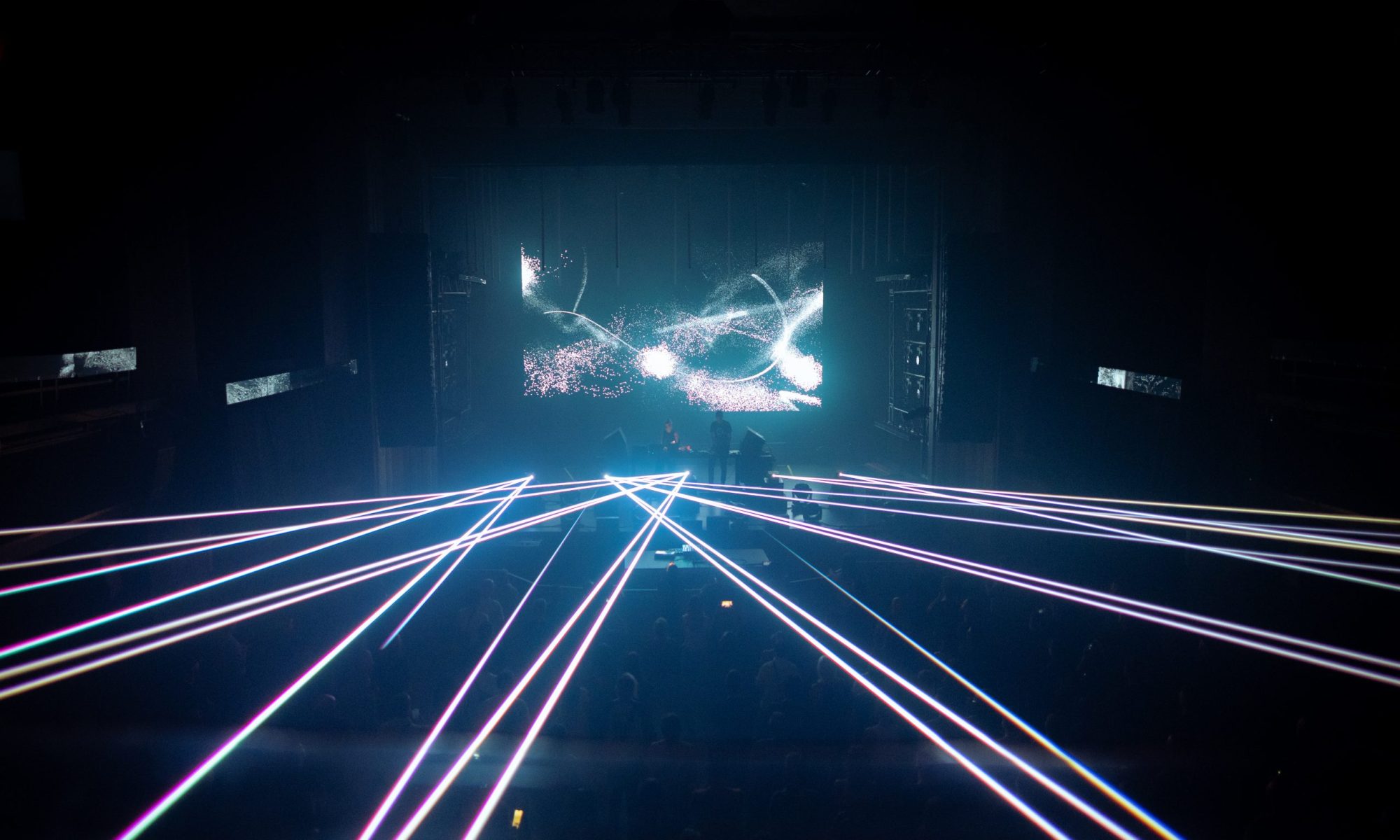
Presenting international works across the spectrum of electronic music, this concert highlights selections from this year’s eighth annual AKOUSMA festival in Montréal. Pierre-Yves Macé (France), France Jobin (Canada), Horacio Vaggione (France/Argentina), and Louis Dufort (Canada) will be interpreting their works live over a 16-speaker system surrounding the audience.

AKOUSMA is produced by Réseaux, a composer-run organization dedicated to presenting and commissioning electroacoustic music since 1991. Montréal is the North American hub for electronic music, offering a wide range of festivals spanning dance music, acoustics research, and everything in between.

Curator: Micah Silver

Bios:France Jobin, aka i8u, is a Montréal-based sound/installation/web artist and curator. Jobin’s audio art can be qualified as “sound-sculpture,” and her installation/web art incorporates both musical and visual elements.

France Jobin has created solo recordings for ROOM40, NVO, and Bake/Staalplaat, among others, and has had many collaborations, including with Goem, Martin Tétreault, David Kristian, and Tomas Phillips.

She has participated in web work/installations in Québec and Toronto, and in various music and new technology festivals in Canada, Europe, and the United States, including Silophone, MUTEK, Le Festival International de Musique Actuelle de Victoriaville, Ver Uit de Maat, send + receive, Les Digitales, Club Transmediale, velak, Shut up and Listen!, ISEA2010 RUHR, and immersound, as well as a soundtrack with Bubblyfish for the film Swordswoman of Huangjiang (Huangjiang Nuxia), presented at the Film Society of Lincoln Center.

Her latest endeavor, immersound, is a concert event/philosophy that proposes to create a dedicated listening environment by focusing on the physical comfort of the audience through a specifically designed space. The premise is to explore new perceptions and experiences of the listening process by pushing the notion of “immersion” to its possible limits. The first immersound was produced in February 2011 at the OBORO gallery in Montréal.

Jobin’s work continues to evolve as technologies enable her to create in new environments.

Montréal composer Louis Dufort’s music ranges from a cathartic form of expressionism to a focus on the inner structure of sound matter.

Dufort developed his style through electroacoustic music, and then turned his attention to mixed music and multimedia art, and has worked with a wide range of organizations, including the Société de musique contemporaine du Québec (SMCQ), the Ensemble contemporain de Montréal (ECM), the Quasar saxophone quartet and Bozzini string quartet, the Ensemble de flûtes Alizé, Réseaux, the Quebec Association for Creation and Research in Electroacoustics (ACREQ), and Chants Libres, for which he wrote the music for the 2005 opera, L’Archange

In 2007, Dufort was commissioned by Société Radio‐Canada (SRC) and the Canadian Broadcasting Corporation (CBC) to make a video and acousmatic remix of Glenn Gould’s recordings for the pianist 75th birthday.

In 2001, Dufort received a mention from Prix Ars Electronica (Austria); in 2005, he was invited to work at the Zentrum für Kunst und Medientechnologie (ZKM) in Germany, and in 2007, he was a guest of Recombinant Media Labs (RML) in San Francisco. He has worked with choreographer Marie Chouinard since1996, and their collaborations have been regularly acclaimed, including Body_Remix, which premiered at the Venice Biennial in 2005.

Dufort teaches at Montréal’s Music Conservatory. He was named artistic director of Réseaux in 2010, and he begins his first season with a concert at EMPAC.

Pierre-Yves Macé is a French musician whose musical practice encompasses improvisation on machines, a background in piano and classical percussion, jazz-rock/prog-rock bands, dance accompaniments, and an interest in literature and musicology. He received his PhD in musicology in 2009, which explored phonography and the “sound document” in contemporary music. His first recording, Faux-Jumeaux, was released on John Zorn’s Tzadik label in 2002. Subsequently, he released Circulations (Sub Rosa, 2005), and Crash_Test II (Tensional Integrity) (Orkhêstra, 2006) for a string quartet. He has held residencies at CalArts in Los Angeles, CNMAT in Berkeley (2004), and GRM in Paris (2006, 2008). Macé has performed in the Octobre Festival in Normandie, MIMI, Villette Sonique, Brocoli, Transnumériques, and Présences électronique. His artistic collaborations include projects with ON (Sylvain Chauveau & Steven Hess), That Summer, Louisville, artist Hippolyte Hentgen, and writers Mathieu Larnaudie, Philippe Vasset, and Christophe Fiat. He is also a member of the Encyclopédie de la parole, a speech encyclopedia crew whose goal is to constitute a compositional plan through which different forms of recorded speeches may be compared.

Horacio Vaggione is an Argentinian-born electroacoustic and musique concrète composer who specializes in micromontage, granular synthesis, and microsound, and whose pieces often are for performer and computer‐generated tape. He studied composition at the National University in Córdoba and the University of Illinois, where he first gained exposure and access to computers.

Vaggione visited every electronic studio in Europe during the 1970s. From 1969 to 1973 he lived in Madrid, Spain, where he was part of the ALEA group. He also co‐founded an electronic studio and music and computer projects at the Autonomous University of Madrid with Luis de Pablo. In 1978, he moved to France, where he still resides, and begin work at GMEB in Bourges, INA‐GRM and IRCAM in Paris, where his music moved from synthesized and sampled loops (as in La Maquina de Cantar, produced on an IBM computer) toward micromontage. Since 1994, he has been a professor of music at the University of Paris VIII, where he organized the Centre de recherche Informatique et Création Musicale (CICM).

About EMPAC

The Curtis R. Priem Experimental Media and Performing Arts Center (EMPAC) opened its doors in 2008 and was hailed by the New York Times as a “technological pleasure dome for the mind and senses… dedicated to the marriage of art and science as it has never been done before.”

Founded by Rensselaer Polytechnic Institute, EMPAC offers artists, scholars, researchers, engineers, designers, and audiences opportunities for creative exploration that are available nowhere else under a single roof. EMPAC operates nationally and internationally, attracting creative individuals from around the world and sending new artworks and innovative ideas onto the global stage.

EMPAC’s building is a showcase work of architecture and a unique technological facility that boasts unrivaled presentation and production capabilities for art and science spanning the physical and virtual worlds and the spaces in between.

DATA/FIELDS

DATA/FIELDS

“I am pleased to announce that, by popular demand, Data/Fields exhibit has been extended two weeks…through Sunday, December 11th!” – Richard Chartier due to popular demand, DATA/FIELDS has been extended until December 11th, 2011!

“Sharply installed and smartly edited mini-survey of cutting-edge contemporary art… the works in “Data/Fields” sharpen your senses, even as they blur the boundary between sight and sound.” – The Washington Post

New Media Installation Works

Sep 22 – Nov 27
Terrace Gallery
Opening reception: Fri Sep 23 / 7-10pm / Free
Gallery talk: Mon Sep 26 + Wed Sep 28 / 12:30pm /Free

Data are points that flow through fields. We can pause in these fields and extract the information. If data fields are those set boundaries in which we place, consider, and collect information, then a gallery might be a great plane of these fields. Or, leaving the natural world for the subjective, it could become an index, compiled by artist and viewer together. Created by five noted international artists, the works in Data/Fields utilize the thematic implications of the data field as they transform gallery space into hubs of sensory information: sites of signal, noise, presence, and absence. The viewer/listener becomes another connection, another point, in the flow and transferral of data.

Data/Fields is curated by renowned sound artist Richard Chartier.

These selected and commissioned works at Artisphere are the artists’ gallery debut in the Washington, DC area and include two premiere exhibitions in the United States.

ABOUT THE ARTISTS

Caleb Coppock (U.S.)
Mark Fell (U.K.)
Andy Graydon (U.S./Germany)
Ryoji Ikeda (Japan)
France Jobin (Canada)
About the Curator

Richard Chartier (curator) (b.1971), sound and installation artist, is considered one of the key figures in the current of reductionist electronic sound art which has been termed both “microsound” and Neo-Modernist. Chartier’s minimalist digital work explores the inter-relationships between the spatial nature of sound, silence, focus, perception, and the act of listening itself. Chartier’s sound works/installations have been presented in galleries and museums internationally, including the 2002’s Whitney Biennial. He has performed his work live across Europe, Japan, Australia, and North America at digital art/electronic music festivals and exhibits.

In 2000 he formed the influential recording label LINE and has since curated its continuing documentation of compositional and installation work by international sound artists/composers exploring the aesthetics of contemporary and digital minimalism. In 2007 he curated the sound/video program Colorfield Variations, a collection of works influenced by the Color Field painting movement. This program continues to screened and exhibited and digital/film festivals, museums, and art galleries around the world. In 2010, Chartier was awarded a Smithsonian Institution Artist Research Fellowship. 3particles.com + lineimprint.com

France Jobin

photo by Richard Chartier

Entre-deux, 2011, 6-channel site specific sound installation, 144 minute cycles

“Between notes and sounds lie rests and silence. I have come to regard these as the most fragile parts of music.” – France Jobin

Created entirely with actual field recordings from across the globe and on location around Artisphere, Montreal sound artist France Jobin’s site-specific work Entre-deux explores acts of systemic, yet subjective, information gathering. Spaces and times are chosen for their inherent beauty, then processed and reformed as location and experience itself becomes transposed. Entre-deux is the re-placing of data. This site-specific work is the first gallery exhibition of Jobin’s installations in the U.S.
Entre-Deux is supported in part by the Canada Council for the Arts.

CAC_Logo_FR_coul


On view in Data/Fields, a new media exhibition in which the viewer/listener becomes another connection in the flow and transfer of data. The artworks presented act as hubs of sensory information—sites of signal, noise, presence, and absence.  The exhibition features works by five noted international artists, Caleb Coppock (U.S.), Mark Fell (U.K.), Andy Graydon (U.S./Germany), Ryoji Ikeda (Japan), France Jobin (Canada), and is curated by renowned sound artist Richard Chartier.

Audio Screening & Conversation with the Muses


Audio Screening & Conversation | In Conversation with the Muses
Lucia H. Chung (Convenor) with i8u, Miki Yui & Peter Hodgkinson | 02

August 2011 | 7:30-9pm | £2

at SoundFjord
Unit 3b – Studio 28, 28 Lawrence Road, N15 4ER
London, United Kingdom


In response to an invitation to hosting an audio screening at SoundFjord, artist Lucia H Chung conducts an exchange project with artists who have inspired her artistic journey in sound and music making.

This 8-week long exchange between Muki Yui, i8u and Lucia started from a collective contemplation on Yoko Ono’s instruction Secret Piece (1953), first sent by Lucia to the other artists respectively. Responding to the material that they received, Miki and i8u returned their thoughts in the form of text, image and sound. Through this to and fro correspondence, the three artists shared a close and intimate conversation on time, space, memory and sound. This journey of exchange will be presented as a collaborative work that is exclusive to SoundFjord.

The event will also be the premiere of an audiovisual work created out of a collaboration between Peter Hodgkinson and Lucia H Chung.

Finally, Lucia will talk about her forthcoming solo work on murmur records in Japan.

Chain Letter


Chain Letter
Curated by Christian Cummings & Doug Harvey

Summer 2011 Group Exhibition

Venue:

Shoshana Wayne Gallery
2525 Michigan Ave # B1
Santa Monica, CA 90404-4031

Date: July 23 – August 25, 2011
Opening Saturday, July 23 / 6-8 pm

Works by Yann Novak, Robert Crouch, Heather Cassills and i8u’s 29 Palms
released on DER will be part of the exhibit +  many more artists!

Chain Letter is a group exhibition based on admiration.  Initially
conceived by Christian Cummings and Doug Harvey in 2006, inclusion in the
exhibition is based on invitation by someone who admires one’s work.  Each
artist invited, then invites ten other artists whom they admire, and so
on.  This email invite will circulate for thirty days, at the end of which
each artist will install their own work on the floor at Shoshana Wayne
Gallery.

This exhibition is rooted in the ideals of inclusion, and highlights the
social nature of the art world.  It is the hope of the curators that the
response will be vast and that the artists represented will be an
exponential representation of all artists that are currently working and
admired by their peers.

Chain Letter mimics communication today; and the way in which information
is passed.  The outcome will be a testament to the power of connectivity
within society at present.

Other cities worldwide will be participating in the Chain Letter
exhibition including New York City, London, Paris, Johannesburg,
Philadelphia, Boston, Seoul.

facebook

Bring to light NYC

 Bring to light NYC – Nuit Blanche New York

October 1st 2011 in Greenpoint

The Festival

Bring to Light is a free nighttime public festival of art in New York City that takes place simultaneously with “nuit blanche” events in cities around the world. Inviting emerging and established artists to make site-specific installations of light, sound, performance and projection art, the event creates an immersive spectacle for thousands of visitors to re-imagine public space and civic life. Bring to Light will transform streets, parks and the industrial waterfront of Greenpoint, Brooklyn set against dramatic views of the Manhattan skyline.

JiKU

Translated from the Japanese as “space-time”, JiKU (jeekoo) is an audiovisual, interactive experience as well as a video mapping installation and projection. While listening to a live music stream, audience members view an intricate visual projection, programmed by the artist to respond specifically to the music. Displayed overhead, the projection distorts the space of the immediate area as it showers light over participants. JiKU will energize a dormant location within Greenpoint, as the artist manipulates the space based on the real time reactions of the individuals inhabiting it.

Projection by Chika

Audio by i8u

io sound – “evp.re” on Unearthed from Airwaves

New cd on io sound May 2011

scant intone
richard chartier
tomas phillips
jeff carey
coingutter
i8u
*saibotuk


The movement of air currents are capable of causing a candle to quiver or waver. Air currents are the providence of the breath of the dead. The spirits of the deceased traverse the River Styx as souls of air. In Sanskrit, prana; in Greek, psyche or the pneuma of the aura; in Latin, the animus and spiritus of being. Gathering the spirits of the dead – their disembodied voices – into a wind capable of influencing a candle’s flame demonstrates the telekinetic power of the beyond

review – Trilogy and Epilogue (and/OAR) 2010 – by Clive Bell – The Wire

Michelangelo Antonioni: Trilogy And Epilogue
Various

and/OAR 2 X CD

“I am personally very reluctant to use music
in my films, for the simple reason that I
prefer to work in a dry manner, to say things
with the least means possible,” said
Michelangelo Antonioni in 1961, the same
period in which he shot the films
L’Avventura, La Notte, L’Eclisse and Il
Deserto Rosso. So, it’s appropriate that this
collection of 24 homages to those films,
following two previous and/OAR collections
dedicated to Ozu and Tarkovsky, contains
few obviously ‘musical’ elements:

Dale Lloyd and Marihiko Hara both feature tentative
pianos, and Kyle Bruckman plays cor
anglais on EKG’s fine track, but otherwise,
we’re in a workd of vast spaces, ambiguous
soundscapes, changing weather and
glowing noise.

Atmospheric works by Juan José
Calarco and Richard Garet could easily be
soundtracks in their own right. i8u (aka
France Jobin) is hyper minimal,
shifting curtains of colour just barely there.
Asher has possibly buried a string orchestra
in his back yard, while Tomas Phillips
melds chiming bells with intake of breath
(lifted) from an Antonioni soundtrack?).
Also excellent are Olivia Block with Adam
Sonderberg, and Pali Meursault’s filmic
concrète, a dream of trains with squeaky
window hinges. All these tracks are
consistent with one another, meaning the
collection works surprisingly well as a
straight-through listen.

And and/OAR,s Ozu homage came
accompanied by an online booklet of
photos and track info, but here the link
between music and films is never discussed,
which suits Antonioni fine. Stuck in our
memories, his images become the music’s
context. Its ambiguity fits them like a glove:
Monica Vitti’s bleak couplings, those
urban landscape where something or
someone is missing.

Clive Bell

review – Trilogy and Epilogue (and/OAR) 2010 – by Ron Schepper – Textura

Trilogy and Epilogue on and/OAR
Michelangelo Antonioni’s filmography offers such a rich source of imagery and
themes it’s a wonder no experimental music project has appeared until now
based upon it. All credit goes to and/OAR, then, for choosing the Italian auteur
as the third in its film director series (previous volumes honoured Andrei
Tarkovsky and Yasujiro Ozu), with the two-disc set, formally titled
Michelangelo Antonioni – Trilogy and Epilogue, focusing on L’Avventura (1960),
La Notte (1961), L’Eclisse (1962), and Deserto Rosso (1963). Antonioni is, of
course, the master of ennui and alienation whose works are populated by
wandering souls who either vanish altogether (L’Avventura) or co-exist but
with the littlest of connection to one another. Not surprisingly, he preferred that
his films be generally unencumbered by music’s presence, believing that his
stories would breathe better without such interference; in that regard, Giovanni
Fusco, whose music appears in most of Antonioni’s films from the late 1950s
to the early ‘60s, apparently declared, “The first rule for any musician who
intends to collaborate with Antonioni, is to forget that he is a musician!”

A few other background details are worth noting before turning to the contents
of the release itself, specifically Antonioni’s sensitivity to the importance of
natural sounds—what he regarded as the “true music” of a film—and the
pioneering electronic music that Vittorio Gelmetti contributed to Deserto Rosso.
Such dimensions of the director’s work draw a clear line connecting the artists
featured on and/OAR’s recording, all of whom in one way or another share like-
minded sensitivities to environmental sound and to the role of electronics in
current music-making practices. The set features over two hours of lower-
case, electro-acoustic works peppered with the kinds of pregnant pauses and
empty spaces that characterize Antonioni’s films. Some of the pieces (all
untitled) are heavily electronic in nature (Marc Behrens’ turbulent setting, Antti
Rannisto’s throbbing drone), while others inhabit an interzone where acoustic
instruments (clarinet, cello), natural sounds (industrial creaks, cavernous
rumbling), and electronic manipulations reside. The artists involved will be
familiar to those conversant with the microsound genre, with figures such as
Roel Meelkop, Ben Owen, i8u, Lawrence English, Steinbrüchel, Jason Kahn,
and Tomas Phillips taking part. The piece by Pali Meursault (with Ici-Même)
stands out as one of the settings that is most rich in outdoor sounds, with train
clatter, traffic noise, and bird sounds threading their way into the mix. Richard
Garet’s sub-lunar exploration sounds like the essence of La Notte and
L’Eclisse distilled down to a seven-minute form. Dale Lloyd’s brief piano
rumination arrives as a breath of fresh air amidst such abstractions, as does
Marihiko Hara’s at album’s close.

The package for the release includes two quotes taken from Seymour
Chatman’s 1985 book Antonioni: Or, the Surface of the World, one of which in
particular merits inclusion here for the clarity it brings to the director’s
approach: “Antonioni asks us to take a slow, steady look at the world around
us, to forget our ordinary preoccupations, and to contemplate that which lies
slightly athwart them.” Michelangelo Antonioni – Trilogy and Epilogue

review – 29 Palms (der) 2010 – by Adrian Dziewanski – Scrapyard forecast

29 Palms, i8u on Dragon’s Eye Recordings

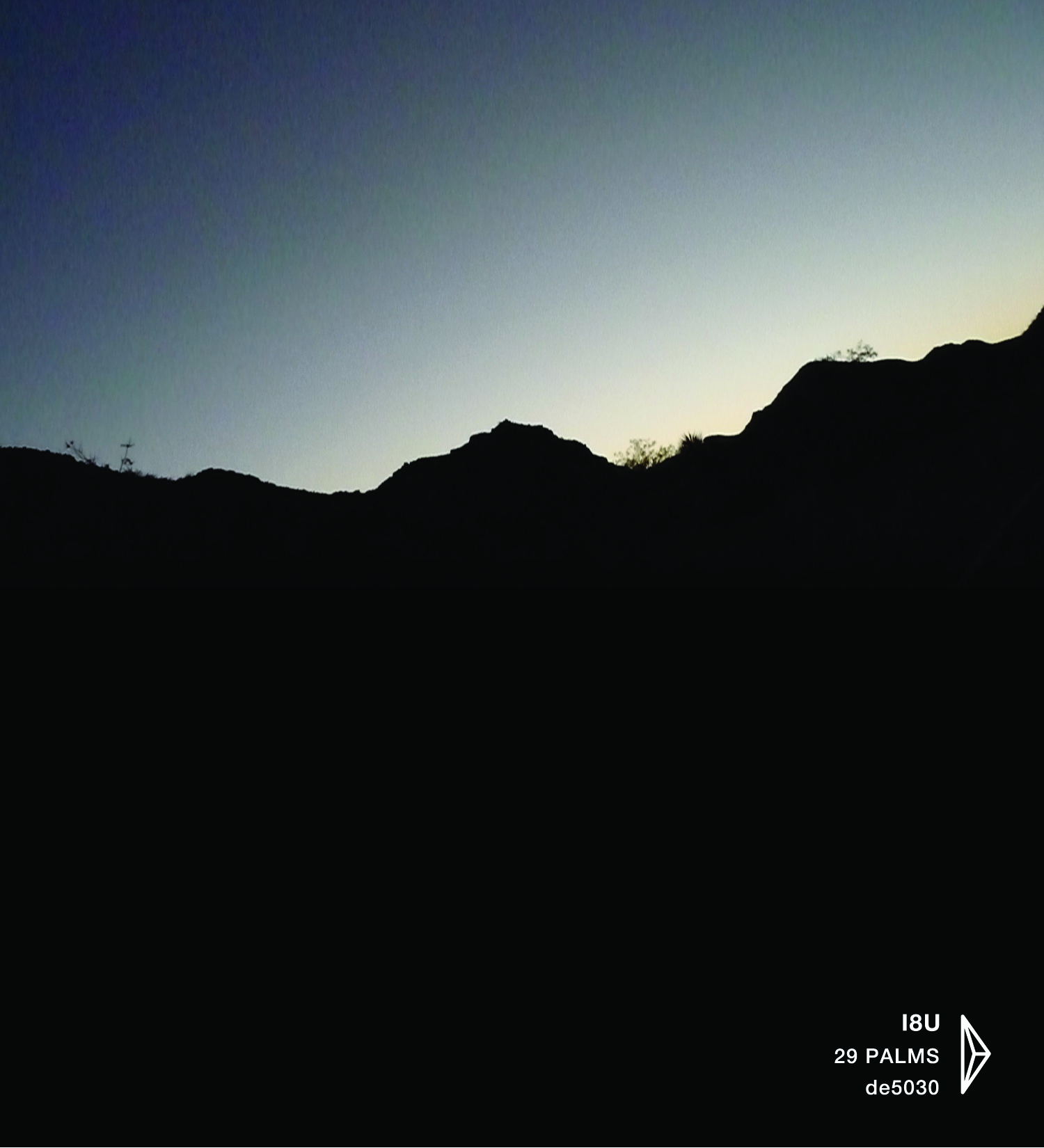
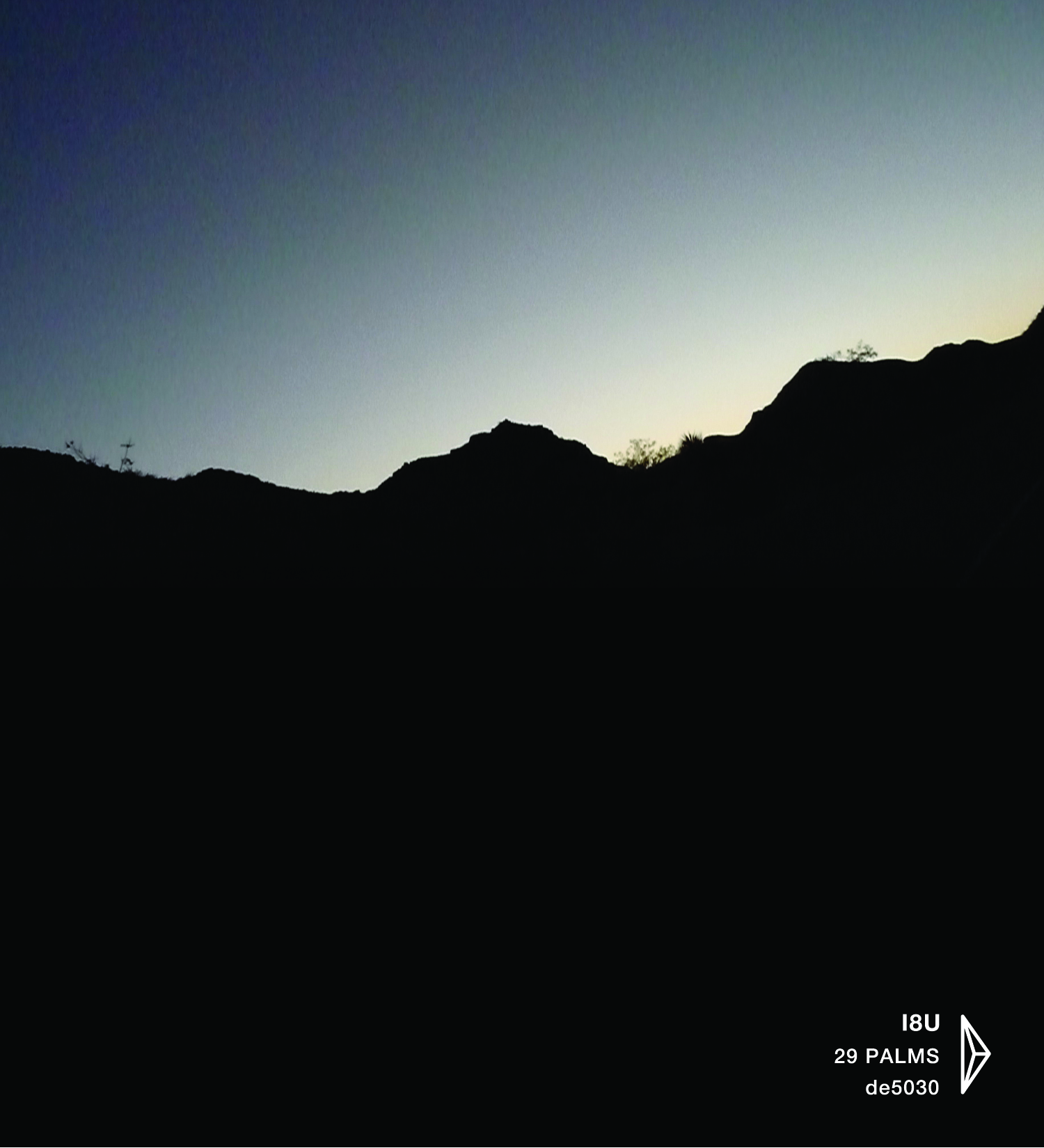
I was initially introduced to Jobin’s work under the i8u guise from her contribution to the magnificent Physical, Absent, Tangible compilation released on Richard Garet’s own Contour Editions label (read my review). Expanding greatly on that comp track, 29 Palms is a 41 minute piece for field recordings, processing and analog gear that remains true to the austerity of past i8u releases yet feels more of an organic effort. The effervescent drones that fill in the space between Jobin’s clinical frequencies during the latter half of the composition are especially note worthy, reminiscent of John Duncan’s Phantom Broadcast. Very nice.

Jobin’s pacing remains quite brilliant throughout, especially evident in the very quiet midsection, where one has to remain focused to discern for changes, and although subtle, they are there. The choice to opt for more lower range frequencies as opposed to ear splitting highs – highs that I’ve heard Jobin achieve in the past – works to her advantage here. Some of those high frequencies make themselves known though are rarely at the center of attention, existing more as appendages to a wider body of sound. Simple yet elegant packaging, edition of 200.

The Outsider 3 | Women in music by Adrian Dziewanski


scrapyard forecast

The Outsider is an on-going feature that pertains to ever changing themes within the world of sound art. More specifically, it highlights micro-niches within this world, commonalities through place and style, organizations that facilitate sound practice, important sound documents, etc…Hence, the Outsider pertains to anything outside of a typical album review. Previous Outsiders have included Select Music From Australia and the Framework 250 Compilation ++.

As the title suggests, May and June will see the unfolding of an eight part series dedicated to women working in varied fields of experimental music as both curators and musicians. Over the three years of managing this blog I’ve rather embarrassingly, though unintentionally, overlooked much of the fine work produced by talented females across the globe. Let this feature make up for those years of neglect. The format for the series is such that each artist is given their own post featuring a photograph, a pre-existing bio, and a review of a select work.

I was initially introduced to Jobin’s work under the i8u guise from her contribution to the magnificent Physical, Absent, Tangible compilation released on Richard Garet’s own Contour Editions label (read my review). Expanding greatly on that comp track, 29 Palms is a 41 minute piece for field recordings, processing and analog gear that remains true to the austerity of past i8u releases yet feels more of an organic effort. The effervescent drones that fill in the space between Jobin’s clinical frequencies during the latter half of the composition are especially note worthy, reminiscent of John Duncan’s Phantom Broadcast. Very nice.

Jobin’s pacing remains quite brilliant throughout, especially evident in the very quiet midsection, where one has to remain focused to discern for changes, and although subtle, they are there. The choice to opt for more lower range frequencies as opposed to ear splitting highs – highs that I’ve heard Jobin achieve in the past – works to her advantage here. Some of those high frequencies make themselves known though are rarely at the center of attention, existing more as appendages to a wider body of sound. Simple yet elegant packaging, edition of 200.