
June 28th 2014 at the Belvedere of San Marco Dei Cavoti
France was invited to take part in the artist in residence program of Liminaria festival in the Fortore region.
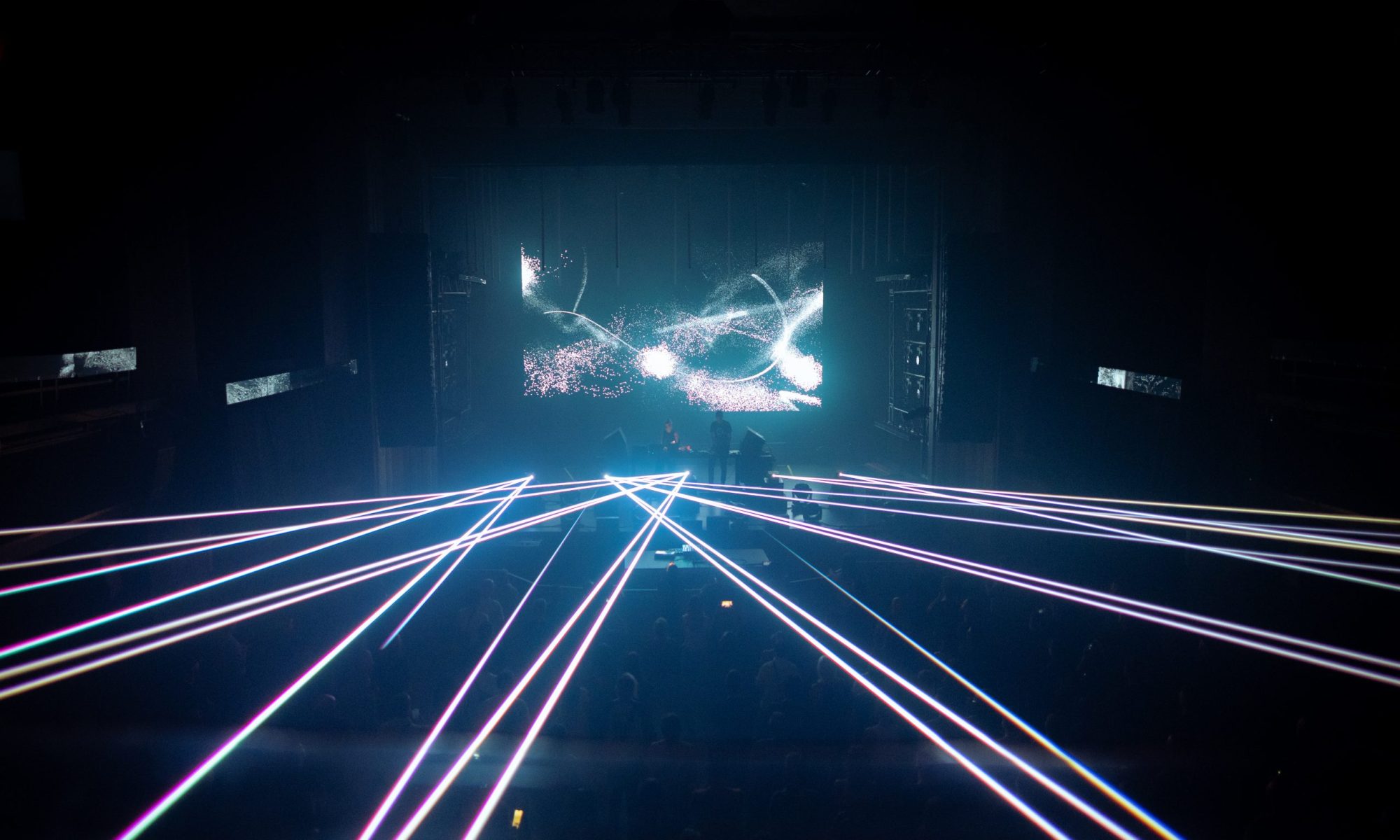
The result culminated in a concert at the Belvedere of June 28th 2014.
film soundtrack composer, sound / installation artist, curator – An architect designs works that occupy spaces; I create sound sculptures that fit in the flow of time and perception
June 28th 2014 at the Belvedere of San Marco Dei Cavoti
France was invited to take part in the artist in residence program of Liminaria festival in the Fortore region.
The result culminated in a concert at the Belvedere of June 28th 2014.

Flussi – Avellino – August 29.2014 – ESP STAGE Casina del Principe – 18:30
| “France Jobin wishes to thank the Conseil des arts et des lettres du Québec for its financial support.” |


read – TOKAFI
France Jobin is not trying to understand the world – but her own place, in it.
France Jobin is a sound artist’s favourite sound artist. Minute attention to detail, a penchant for precision and an ear for beauty in unusual places have translated into a discography that may not be overly prolific, but continues to impress the true sonic connoisseurs. It is also the result of an anything but typical biography, which saw her rebelling against her classical education by performing keyboard in a blues band for many years, before discovering her affinity for the electronic medium. Despite emerging as one of the leading artists of the microsound scene of the early millennium, Jobin’s style always remained deeply personal, infused with a sense of fragility and sensitivity that resulted from an intimate relationship with her sounds and where they might lead her. After more than a decade of operating under the i8u moniker, Jobin switched to using her civilian name on the occasion of her 2012 work Valence on Richard Chartier’s LINE imprint, a decision she would stay true to for her latest full-length The Illusion of Infinitesimal. In many respects, the album marks an acme within her oeuvre, although, as she stresses, it is merely the logical result of continuing her proven style and philosophy: “I felt it important to maintain and respect in the tradition that Richard Chartier established for his label. One of consistency and uncompromising attitude towards minimalism. With The Illusion of Infinitesimal, I attempted to push further this notion of peeling away superfluous layers so that only the true essence of each sound remains.”
You once asked yourself: “Why do I love to hear classical music but loathe playing it?” I’d be curious about your answer to that question.
Perhaps, I have today come closer to an answer. I still love classical music but I think it was not the right medium through which I could communicate properly. I found that many of the emotions I felt were not being conveyed clearly through playing the piano and interpreting someone else’s works. My aim was to communicate what I felt.
You have gradually moved from your background as a classically trained pianist towards different interfaces. How content are you with these interfaces compared to the keyboard?
Moving to interfaces and electronic music as a whole really freed me. Electronic music for me flows effortlessly and is close to what I am trying to convey. I also love sound, I love the variety of sounds that exists. When I was playing keyboards or piano, I was under a traditional music sphere of time signature, keys, notes, chords, etc. It is possible to get away from those with keyboards and sound programming, but personally, I always felt restrained. I needed to unlearn all that I had learned to enable me to make experimental music. When one plays keyboards, one is playing one bar while reading the next. This implies that you know what to expect. I felt this was a hindrance for experimental music. I had to rid myself of the years of training except for one thing, the actual act of listening. Everything else had to go. I can now say that I have started incorporating elements of my old training back in my work, I have been including piano and “musical elements”, as “sounds”.
For a few years, you would be active as a performer in a blues band. What were some of the experiences that would lead you towards the discovery of ‘the room’ as part of the sonic experience?
Playing blues and touring was a great “school of sound” for me. While touring, one is often subjected to less than perfect conditions in regards to the venue, sound system etc. Jazz festivals present a different dynamic, outdoor stages, where the sound is often lost. One learns very quickly that the most important person to a musician, is the sound man and that including him equally in the process is intrinsic to the performance. Among the things I witnessed for instance, was that the good blues players would always talk about the “feel”. No matter how technical a musician, if he did not have that “feel”, the subtleties of the idiom were not assimilated in the playing. Less notes, more feel was always the aim. I realized this was my initial exposure to a minimalist approach.
Another expression often used was ” being in the pocket” or “staying in the pocket”. This one was aimed at the rhythm section – drums and bass – and the important relationship between the two. If they were in sync, anything was possible, if they were not, the whole structure fell apart.
These concepts shaped my listening experience. I listened to each instrument individually, and to all of them, as one. During that time, we would have to adjust to each room we played, the guitarist with his amp and effects, me on keyboards and again, the band as a whole. If one room had too much treble, we would have to compensate, if the stage was set in front of a huge window, we knew that meant trouble as the sound had no solid wall to bounce from. I cannot tell you how many times we walked into a room and had to adjust on the fly because of so many different elements such as what the walls or floors were made of, how high was the ceiling and so on. It became such a regular occurrence that eventually, I found myself walking into a room and within seconds, know exactly what the room would sound like. When having to do our own sound – which was often the case – I was the one designated to do so. As I gained experience, it became obvious to me that the room played an integral part of the performance.
Once I switched to experimental music, I was able to take this experience further, using the room to my advantage. I feel I can really push this notion to its fullest with the use of frequencies that “bring out” the acoustic qualities of a room and exploit them.
You took a break from music after giving birth to your two sons. What were you listening to in these ten years? Did you end your compositional activities completely or are there still some productions from this period?
I listened to all kinds of music as I always do, jazz, electronic, classical, reggae and so on. Among others, this included Miles Davis, John Coltrane, Thomas Köner, Richard Chartier, Asmus Tietchens, Pan Sonic, Mika Vainio, Bach, Mozart, Gustav Mahler, King Crimson and many more … Miles Davis’s Kind of Blue was and still is a regular on my playlist.
My sons were born very close to each other, which resulted in a period of chronic lack of sleep. During those early years, I proceeded to transform my studio, learn analog gear and hardware as well as get acquainted with computer generated methods. I spent a lot of time learning computer related methods while “unlearning” my previous musical training. There are no productions from this period but rather, all this work culminated in the release of my first self titled i8u CD. Strangely though, it would take me until 2003 to take the plunge and perform strictly with a laptop.
Especially with your most recent releases, I am noticing your use of terminology from the realm of physics for track titles and to describe the music.
As my children became older and more independent, I had more time to pursue interests. Science, physics, quantum physics were natural choices as I strived to move towards a more streamlined approach to life. Quantum physics describes the nature of the universe as being much different than what we see. This is exciting to me because every field recording I make, I listen to in this way, which is also how I view life. This pursuit of knowledge in science translated to a similar path in my music and naturally influenced my approach to sound and composition. My sound processing slowly became about the peeling away of each superfluous layer, until I reached the essence of each sound, from that, it effortlessly moved to each movement within a piece and composition as a whole.
I am not so much trying to understand the world as I am trying to understand myself, in it.
If I understood correctly, you also began programming your own software tools at one point.
My stint in programming was brief and only lasted one and a half years. I took workshops for MAX/msp and managed to create one instrument that I use when I improvise with other musicians. Although I found the experience freeing and very creative, the amount of time needed for me to become proficient in programming was also time taken away from making music. I was happier programming sounds and composing.
One of the things that would become more and more apparent in your music was your move towards quiet dynamics. What happens when sound approaches the threshold of perception, do you feel?
Everything happens. It changes one’s perception, it forces one to listen more intently and by that very act, makes the listener actively involved with the work. It opens up the floodgates to the myriad of possibilities. Amplitude can change the nature of a sound completely. Low amplitude to me is a great tool, it creates magic as you listen over and over. It never is quite what you heard at first.
The dominant underlying intent throughout my work, be it albums, concerts or installations, is to make people stop, remove all distractions, and listen, simply listen.
Pierre-Alexandre Tremblay once asserted that “writing for electronics requires the same knowledge as writing for orchestra”. Is that something you can relate to?
Absolutely, in electronics, you are composing with sounds instead of instruments.
Why then, as you recently wrote in the press release to your new album, is it an ideal to detach yourself from the sounds?
Sounds to me, are like children, one cares for them, nurtures them and eventually, they detach, and only in that very delicate act of detachment, can their true essence be revealed.
What are some of the criteria that make you feel satisfied with a sound or piece?
I approach each piece with a sound that pleases me at that particular moment. The attention to details comes in the sound processing and ensuring that these sounds delicately compliment each other. Albums are great because they give me the luxury to “obsess” on a 3 second fade for a week or as long as it takes until I am satisfied. I recently had a discussion about this with Christopher Bissonnette and we both agreed that “deleting the dots” is a painstaking but satisfying exercise! I feel a sound or a piece is finished when I have managed to transpose what I hear in my head as accurately as I possibly can.
When you’re immersed in sound all day, digging deep into the details, doesn’t it become less fascinating – because you understand the way certain things work?
Au contraire, being immersed in sound all day has become exponentially more fascinating. Unlike some, who have been conditioned to tune out background noise, I get caught in endless loops of analyzing how it makes me feel, and how I can manipulate these sounds if I could capture them. Mystery will always remain a part of the process as I try to understand what is reality. As I try to interpret and recreate this reality, it is clear to me that sound is the foundation of my own.
How do you see the balance between the emotional and the intellectual in your compositions?
I think this may come from my own attempts to find the same balance in my life. The emotional and intellectual balance is an inclusive one for me, I don’t see how one can exist without the other, within us. Sounds can evoke both emotions as well as intellectual appreciation. I believe that by presenting sounds that are physical puts the listener in a state of receptivity, when that state of mind is achieved, it becomes easier to introduce the more intellectual sounds, which may not be so pleasing at first. It’s a matter of context, and how things are presented.
What is your concept of beauty?
For me, it’s one where artists or musicians are able to communicate their unique identity. If they have found that identity and refined it, it will be clearly communicated through their work.
France Jobin interview by Tobias Fischer
France Jobin photos by Sandor Dobos

France was asked to write a short essay about creativity by Miguel Isaza,
you can read “From insticnt to creativity ” here : infinite grain
February 4th, 2014
Childhood
Epiphany I
It is a frigid February afternoon. Yet here I am, nestled in the warmth of my snowsuit, scarf and “tuque”, paralyzed nevertheless by the cold as the temperature hovers around -20C. Such biting chill and immobility are familiar to me; both bring a stillness in which I find great refuge. I am not here for the car races; what captivates my attention is the sound. Every year, in Quebec City during the winter Carnaval, an annual car race is held on the icy, snowy sinuous roads of the Plains of Abraham. Winter willingly provides both a landscape and sketchpad of packed snow roads, over which the cars speed and skid. The result: a deep, buried, rhythmic sound. I still love the crackling of winter tires rolling over packed snow.
Epiphany II
Across the Plains of Abraham is a swimming club to which I belong. I am enrolled in regular as well as synchronized swimming classes. The pool does not have built-in speakers (1970). Our teacher plays vinyls on an old turntable, tapping the time on the pool ladder with a metal hanger. There, I encountered another form of sound transformation. While running through the various synchronized swimming routines, I would often end up vertically upside down underwater as the music filled the echoed space above me. A new version of Maurice Béjart’s Messe pour un temps nouveau would play out, no longer set in time; it was stretched, it was floating, I loved it!
These two moments, imprinted in my being, were instrumental in shaping the way I relate to sound. They helped me to understand how sound is transformed by its environment. A discovery of new listening approaches. This adventure began at the age of 12.
The Path
These unexpected encounters initiated my lengthy search (20 years) for a form of music that could enable me to best express myself. The quest led me to explore the classical, blues, reggae, and other musical genres. Classical gave me the love of dynamics; blues, a more intuitive sense of dynamics, and reggae, the appreciation of complicated rhythm. It was while playing blues that I learned to program sounds on keyboards and rack mounts. But what blues really gave me was a first-hand experience of how sound behaves in a given room or space — from individual instruments to a full band as well as the balance between all these elements. Touring and playing in different venues every weekend was my “school of sound”. This experience translated into being able to trouble shoot any technical problem very quickly, but, most importantly, it taught me to know instinctively what a room would sound like, what would or would not work. Later, I incorporated this knowledge in my work by treating the room as an instrument, whether for a concert or an installation.
Still unsatisfied, still looking for the right “language” with which to communicate, I discovered electronic music. As I experimented, one thing became obvious to me: it flowed, it was effortless, I had finally found the language. Now, I had to become proficient. It became my new obsession. Taking what I had learned from programming sounds and applying it to my creative approach was my new focus, one that would later become a signature of sorts. Going from noise to drone, ambient to techno and experimental, I became bored. It had become too easy, and I was not achieving what I had set out to do. I realized I was looking at this all-wrong. My approach was influenced by the years spent with traditional music. My instrument, the keyboard, required that I read the following bar while playing the present one. This technique creates a state of knowing exactly what will come next with certain predictability, and I felt this was wrong for me.
The other elements I questioned were the staff and its musical notations. I came to the conclusion that I had learned to read music a certain way. I thought, “what if it’s not the notes that create music, but the spaces between the notes, all those empty spaces?” I applied this idea to my approach to programming sounds, and it led me to minimal sound art, which, in turn, led to a new-found interest in science, quantum physics, the elegant universe, and the tiny world of particle science.
The Process
“Often, my compositions start with a feeling or emotional state. There is a likelihood of finding a certain emotion in a piece, but neither is it guaranteed, nor do I know exactly when or where I will find it. The act of looking for that emotion in of itself will distort the process. Although one might think experimental music allows the artist complete freedom when composing, I feel constrained both by my mental state and the way I build the piece.
“I find an unlikely parallel in quantum theory and composing. The electron that can exist on a different orbital plane can never have its velocity measured or even its exact location known, due to the intimate connection between the particles and waves in the wacky world of subatomic dimensions.” Excerpt from the text on the album Valence LINE_054, February 2012
The focus of my work is replicating as accurately as I can what I hear in my head — an enormous undertaking I thoroughly enjoy that constantly challenges me. As I grew closer to reaching this goal, one problematic issue emerged: the context in which I was presenting my work, be it a live show or an installation. Logically, this new irritant became an ongoing preoccupation, parallel with my work. Concentrating on the context of presentation made it more difficult for me to disseminate my work the way I wanted it be presented in live venues. I also found it difficult to hear artists’ compositions, whose work I love, in contexts that did not do justice to their work.
The Listening Experience, The Context
I imagined a space where a recumbent position would afford greater physical comfort to the audience, freeing them of physical constraints enabling them to open themselves to listening wholly during a sound art event that could be intellectually demanding. The premise can be expressed thus: if people are physically uncomfortable, they are not in a state “to receive” challenging, minimal sound art; if the audiences are comfortable, they will be more receptive. I created immerson.
Although the principle seems limpid and almost self-evident, articulating this awareness was not. immerson emerged only after lengthy reflection on the listening process of audio art disseminated in public presentation venues. Thus immerson: a dedicated listening environment, focusing on the physical comfort of the audience in a specifically designed space. The premise for immerson is to seek out/explore new perceptions and experiences during the listening process by pushing the concept of “immersion” to its possible limits in order to maximize the experience for the public.
“Between notes and sounds lie rests and silence. I have come to regard these as the most fragile parts of music.”From the sound installation, Entre-Deux, part of the new media exhibit Data/Fields, curated by Richard Chartier in the Washington, DC area, along with Ryoji Ikeda, Mark Fell, Caleb Coppock, and Andy Graydon.
Written in 2013 by France Jobin, sound artist founder of immersound, a concert event/philosophy which proposes to create a dedicated listening environment by focusing on the physical comfort of the audience through a specifically designed space. The premise for immersound is to seek out/explore new perceptions and experiences of the listening process by pushing the notion of “immersion” to its possible limits.
June 23 – 28th 2014
France was invited to take part in the artist in residence program of Liminaria festival in the Fortore region.
The result culminated in a concert at the Belvedere of June 28th 2014.
 June 16 -22nd 2014
France was invited to take part in the artist in residence program of Portobeseno festival in the Trentino region.
The result culminated in a concert at Castel Beseno June 22nd 2014 with live visuals by live visual HYPER!ION
and SARA FILIPPI.
Castello di Beseno
ingresso libero
VOWELS
NICOLA DI CROCE
FRANCE JOBIN
LUIGI MASTANDREA / ANDREA PELATI
live visual
HYPER!ION
SARA FILIPPI
installazione audio video
PORTOBESENO
installazione sonora
CONCRETE BOLOGNA ELETTROACUSTICA

Il concetto di infinitesimo è forse fra i più dibattuti nella storia della logica, sia a livello filosofico che strettamente matematico. Quando Leibniz li introdusse come sostanziale traduzione del concetto di monade in ambito logico fu rivoluzione, poi per un secolo vennero accantonati e subordinati ai limiti per mancanza di rigore logico, salvo poi ricomparire nel secolo scorso nell’ambito dell’analisi non standard. Cosa c’entra tutto questo con la musica? Proprio a questa domanda che sorge spontanea vuole rispondere la canadese France Jobin, nota quei pochi già vicini alla sua longeva opera come I8U.
Il tentativo è quello di considerare ciascun singolo suono come fosse una particella, e dunque un infinitesimo di materia a dimensione zero: le tre lunghe digressioni di “The Illusion Of Infinitesimal” ne studiano l’interazione, andando in particolare a verificare la natura del presunto movimento rotatorio che lega i suoni stessi.
La ricerca, in realtà, non si discosta troppo dalle sperimentazioni degli ultimi allievi di Morton Feldman eTony Conrad (Phill Niblock in testa), ma a questo Jobin concilia pure il concetto di musica generativa, musica che si autocrea e autoproduce a cui il compositore fissa esclusivamente le coordinate-base, il sentiero da percorrere.
Il risultato di questa mediazione è dunque un lavoro di pura contemplazione sonora, che in sostanza va a collocarsi su quel sentiero di minimalismo ambientale da sempre tanto caro a Richard Chartier – non è un caso che il precedente lavoro a proprio nome di Jobin sia uscito, due anni fa, proprio per L_NE. “1/2” lascia estendere dunque un drone docile e liquido fino a raggiungere la massima estensione, e gioca con i livelli di volume sfruttandoli sostanzialmente come lente d’ingrandimento di un microscopio. Unica forma di intervento, resa quantitativamente dal titolo, sta nel sibilo che cerca ciclicamente di fare da acceleratore per le microparticelle sonore, senza però ottenere altro risultato dal “disturbare”.
In “0”, più breve e compatta, la velocità del moto sonoro si riduce ulteriormente complice la totale assenza di azione. I ventitré minuti di pura ambient-drone di “+1” aggiungono finalmente un po’ di sostanza alla forma, ma recuperando anche il legame con la realtà che gli scopi sperimentali dei due monologhi precedenti avevano finito col lacerare.
Vien da chiedersi dove possa portare questo proliferare di tentativi di lavorare sulla natura logica della musica prescindendo paradossalmente da ciò che la distingue da un puro succedersi di suoni: il sentimento. Jobin ci riesce, probabilmente suo malgrado, dando vita a una forma la cui gracilità melodica consente un ascolto suggestivo anche a chi volesse tenersi lontano dalla complessa dimensione concettuale su cui si fonda.
Matteo Meda
FRANCE JOBIN: The Illusion of Infinitesimal CD Baskaru
Canadian sound installation expert France Jobin started her career as a Blues artist, so all in all this release under her own name is nothing but a departure from the path she started out on.
Over the course of three tracks Jobin plays on a varying degree of subtle harmonies and droning pads, the atmosphere creeping upward, approaching the ear with blissful grace and attention to detail. Understated and minimalistic, there are hidden ranges within ‘The Illusion of Infinitesimal’ that infiltrate your ears and play on your imagination, leaving you questioning the source of the sounds that filter through the speakers.
Reminiscent of the ‘live @ Synaesthsia’ 3”CD I first encountered in 2000 from Fennesz and Rosy Parlane, this approaches the listener with the same oozing warmth of Summer twilight, where the sun sits low in the sky and all is well with the world.
With a varying degree of swells and pitches, France lets her actions glide enigmatically from start to finish, over the course of just under an hour. The beauty of this creation is that time simply flies by and becomes irrelevant once everything comes to its conclusion.
Tony Young
9/10
France Jobim, a sound artist based in Montreal, Canada has a very unique, poetic approach to sound design. A very experienced sound artists with huge background in installations, participant of numerous experimental music festivals. Her philosphy of immersion is clearly present here.
A multilayered sound of minute qualities of grainy structures and clean cut walls of sound brick by brick bring the atmoshpere of musical architecture which is embellished with both subtleness and extensive harmony that has a beautiful feminine feel.
Clean cut of technologies and back up of digital artistry have a deep influence on the shape of the tracks which haunting power has a great universal meaning – it could be perceived as something of a background music, an ambience that helps to immerse yourself into it and develop a serious mood.
On the other hand there is strong emphasis on the contextual element – shapeshifting composing like in the example of her album is definitely a great asset when you consider how much you could get of this minimalistic music – a soundscape that really heals you.
Hubert Heathertoes
The Illusion of Infinitesimal CD Baskaru
If some sonic diggers accidentally begin to listen to this album by Montreal-based sound installation/artist and minimalist composer France Jobin aka I8U without knowing anything about its conceptual aspect, I’m pretty sure some of them could surmise that a maladroit nipper foolishly forgot to calibrate input controls on mixer while listening the opening track “1/2” where just some delicate frequencies, high beeps (not so different from pure tones for audiometric tests) and thin piercing sounds cross the microscopic holes left by knitted pad-synths which got intentionally mastered at a very low volume and seem to act like a filter for unnecessary and maybe unwanted sonic intrusions. According to a different way of listening the same track, you could imagine it’s like an unobtrusive diaphragm between listeners and surrounding world, that you keep on feeling whether you are wearing headphones or you are listening to it from loudspeakers, where just some delicate sonic entities occasionally detach from the above-mentioned stream of frequencies as if “1/2” tries to render moments of temporary partinf from “outer world”. Even the only trace of noise on the second part of the suite doesn’t get under your skin as it rather resembles the noise of distant engines (a car, a watercraft, a helicopter o maybe a tractor) when you are on a desolate beach at dawn. A similar route between barely audible loops to resurfacing sonic entities has been followed on the other two long-lasting suites: whereas the central track “0” could evoke a peaceful reverie in a countryside farm, this talented Canadian woman pulls the initial pure tones and bleeps out of the sonic sphere before letting that previously almost silenced drone wrap the listener into a warmer embrace on the final “+1”. That’s a very good rapture in the fertile plot of minimalist ambient.
Vito Camarretta