Mirror Neurons – world premiere at A × S / ak-sis / FESTIVAL 2014 | CURIOSITY

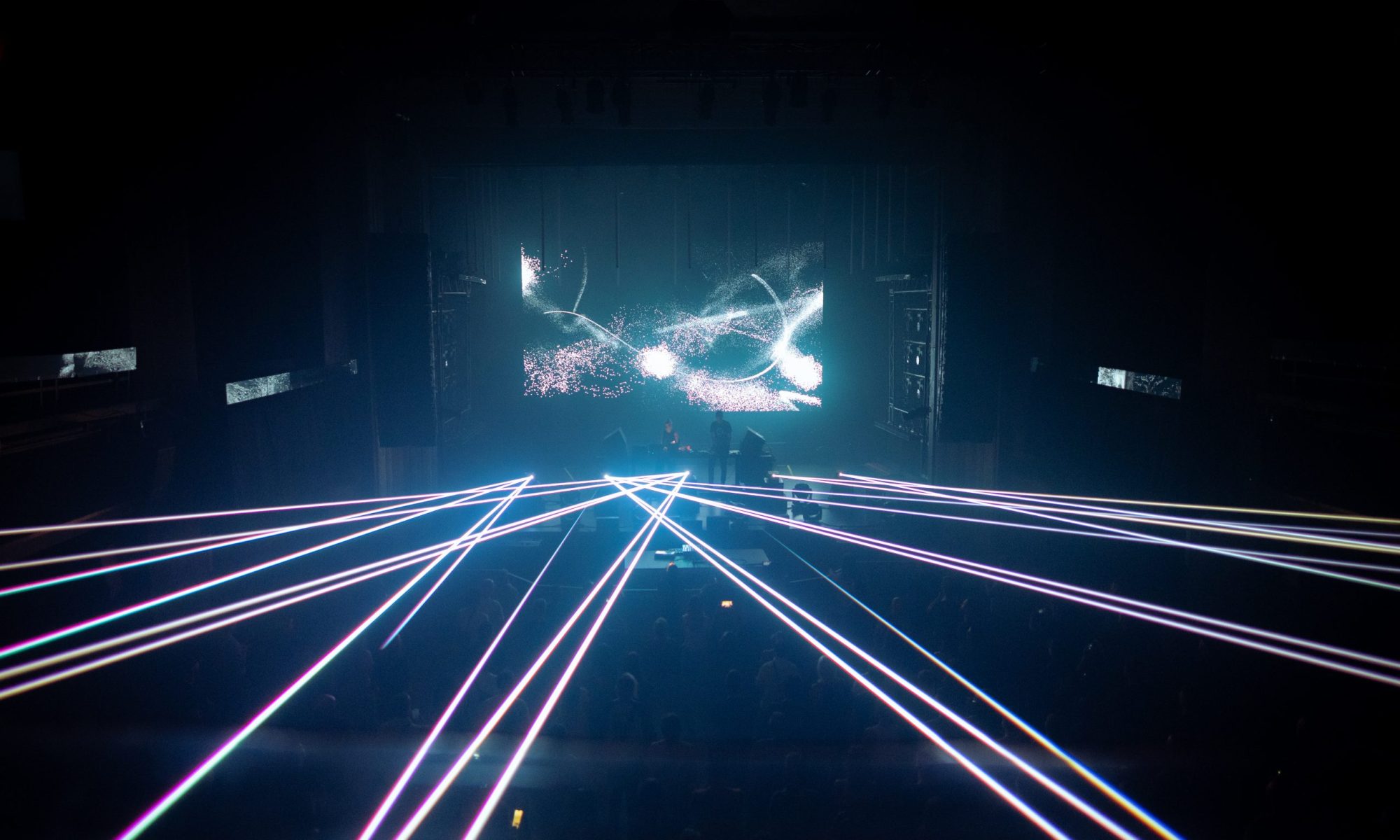
Mirror Neurons : France Jobin + Fabio Perletta with xx+xy visuals
will premiere at A × S / ak-sis / FESTIVAL 2014 | CURIOSITY September 25th 2014
as part of Synergetica Screening. (see below)

AxS Festival 2014 | CURIOSITY is presenting the North American premiere of SPHAERAE, a large-scale temporary public artwork by Dutch architect Cocky Eek. SPHAERAE is an inflatable pavilion — a component of an ongoing strand of research by architect Eek into the pneumatology and tactility of inflatables and lightweight spaces. Developed in partnership with Synergetica Lab in Amsterdam and the Artscience Interfaculty program in The Hague, SPHAERAE consists of five semi-transparent bubbles of different sizes, which together form a multi-dome construction designed for immersive, synaesthetic experience.

Eek was inspired to create SPHAERAE by 10,000 Peacock Feathers in Foaming Acid, an audiovisual performance work by Netherlands-based artists Evelina Domnitch and Dmitry Gelfand. In 10,000 Peacock Feathers, Domnitch and Gelfand use laser light to scan the surfaces of nucleating and dissipating soap bubble clusters.

DOMNITCH GELFANDFeathers_TodaysArt

Unlike ordinary light, the laser’s focused beam is capable of generating a large-scale projection of molecular interactions as well as mind-boggling phenomena of non-linear optics. Sphæræ’sinflatable structure was designed to both serve as a platform for this uniquely spectacular work, as well as create a venue for other artists, scientists, and performers to make 180° works and compositions which explore the phenomena of light, sound and movement within the domes.

AxS Festival 2014 will present Domnitch + Gelfand in a live performance of 10,000 Peacock Feathers in Foaming Acid — the work that inspired the creation of the SPHAERAE platform — and Solunaris, a new collaborative work by William Basinski & Richard Chartier commissioned by the Pasadena Arts Council and curated by Domnitch + Gelfand.

SPHAERAE will also feature the premiere of Sol Path, a new interactive music work by composer/cognitive scientist Bruno Louchouarn.A concerto for solo viola/percussion/soundscape, Sol Path features live performance by renowned viola soloist Brett Deubner, and immersive multi-media by Asheville, North Carolina-based designer Adam Larsen.

Sol Path is inspired by the exploratory path that the Rover takes over the course of a Martian day — a Sol — which is collaboratively programmed by a team of Earth-bound explorers. Sol Path was created in part with composer Louchouarn in residency at NASA/JPL. Through his dialogues with the Mars Curiosity team — rover drivers, artificial intelligence designers, the “planetary protection team” and others — actual data from the Curiosity mission will become inputs to Louchoarn’s composition and inform the very shape of the experience.

SPHAERAE will be on view for the duration of AxS Festival 2014 | CURIOSITY and feature projects including work, as a far-ranging program of sound works, video screenings, and talks by artists including Chris Duncan, Jeff Cain,Mattia Casalegno, France Jobin, Favio Perletta, xx+xy visuals, Francisco López, Intimatchine, Lucky Dragons, Mike Harding/Touch, Yann Novak, Eric Parren, Paul Prudence, Steve Roden, Jet Smits, Julie Tolentino, Martijn Van Boven, Bas Van Koolwijk, and Virons.

SYNERGETICA SCREENING

Curated by Evelina Domnitch and Dmitry Gelfand, the ArtScience Interfaculty and Synergetica Lab present a series of multi-sensory performances and installations in the context of synthetic biology. Founded in 2006 in The Netherlands, Synergetica is an art-science laboratory, investigating photonics, fluid dynamics, acoustics, quantum chemistry and psychophysics.

Visit the Synergetica website: synergeticalab.com

The North American premiere of SPHAERAE is made possible in part by the Mondriaan Fund and GuestHaus Residency.


UNYAZI 2014 – The listening room

iP orbital from Valence released on LINE will be screened September 11 and run through September 13th in the listening room, part of UNYAZI 2014, the South African electronic music festival. The listening room is curated by Carl Stone.

“When Cameron Harris asked me if I would be interested to help curate the 2014 Unyazi Festival with an emphasis on music from what is sometimes called the Pacific Rim, I was glad to accept, and did so without hesitation. While I knew we would able to bring several wonderful artists to perform at the festival, it was clear that because of the limits of schedule and also budget many interesting artists would not be able to come in person. So I came up with the idea of a listening room, where people could gather and enjoy music in a relaxed setting, and where many pieces from my home base in Japan, as well as  South Africa, Australia,  Canada, China, Hong Kong, Korea, the Phillipines, Rwanda, Singapore, the USA, & Vietnam could be enjoyed. In the end, eight hours of music are being presented, all of them created especially for the medium of the loudspeaker. It has been a lot of fun to put together the program, and I hope those of you who can come by the festival and spend some time listening will enjoy it.”

— Carl Stone, Tokyo

The Listening Room

review – the illusion of infinitesimal – (baskaru) 2014 – The Sound Projector (UK)

France Jobin
The Illusion Of Infinitesimal
FRANCE BASKARU KARU:27 CD (2014)

One of the more ‘silent type’ sound art selections to cross my path of late; volume’s now up so high so I’ll probably be blasted into next year when I forget to reduce it for the next CD. Though drifting for the most part in a zero-gravity bliss state, these minimalist compositions do distinguish many a frequency between remote rotary rumbling and a fan-like spreading of sine waves that pierce the head bone, bleach neglected skull lining and fill the sterilized space with a waft of hygienic vapour.

France Jobin returns thus inspired from the realm of subatomic particles and their nebulous existential status, engaged this round by the quantum conundrum of angular momentum: as I understand it, the directional attribute possessed by gyroscopes and Frisbees. Particles possess a more limited version of this; a matter quite mysterious given that they have no discernable size. Moreover, their tendency to alternate with the wave state has rendered objective analysis a notoriously tricky business.

The compositional parallel Jobin draws from this involves working from a given emotion while neither pursuing nor exploring said state, just as one keeps an eye floater in view by keeping the eye still (to paraphrase inexpertly). From this point she painstakingly pares sounds down to their ‘unique essence’, from which point she is equipped to ‘communicate intent without influencing its unfolding, a delicate balance between perfection and detachment.’ This definition of ‘intent’ – perhaps less commonly used – can be found in meditation and internal martial arts with specific reference to the manipulation of the opposing forces of yin and yang. It can designate ‘intention’ divorced from ‘desire’: the information the brain sends to a limb for example. This neutrality is well demonstrated across these three unemotional yet involving compositions, which reveal and conceal different attributes with each listen.

The Sound Projector


review – the illusion of infinitesimal – (baskaru) 2014 – adverse effect – (PL)

Three rather subdued pieces hewn from shimmering, light yet warm, tones and smooth textures by this Canadian artist already known for her sound art and installations. Whilst this work may not sound readily distinguished from so many others of a similar disposition, there is a depth to it obviously arriving from a deft hand. The fact that Lawrence English has his hand in this via the mastering job likewise indicates a wholesome grasp on matters, too. Most pleasant. (RJ)

Richard Johnson (a.k.a. Richo)
adverse effect 

review – the illusion of infinitesimal – (baskaru) 2014 – Liability Webzine (FR)

Connue précédemment sous le nom de I8U, la montréalaise France Jobin sort désormais ses disques sous son propre nom. The Illusion of Infinitesimal est le deuxième du genre. Celle qui a créé le concept d’Immersound, c’est à dire un concept d’écoute pendant les concerts qui invite l’auditoire à l’exploration de sensations quels qu’ils soient, développe une musique ambient qui ne peut que s’écouter à fort volume si on veut percevoir tous les détails les plus infimes que France Jobin place astucieusement au gré de ses flottements sonores. L’infinitésimal donc. Mais où se trouve l’illusion de ce qui est infinitésimal ? En fait, ce que nous montre France Jobin c’est que ce qui est petit ou difficilement perceptible n’est qu’une vue de l’esprit. Pour percevoir ce qui semble invisible ou négligeable à l’oreille il faut que les conditions adéquate soient réunies. Cette notion d’immersion est alors indispensable et rien ne doit perturber la concentration nécessaire à son accomplissement. Et c’est à cet instant que l’on se rend compte que même ce qui est infime peut nous atteindre et nous émouvoir. La démonstration de France Jobin est, dès lors, éclatante et elle prend ici une signification toute particulière. En soi, France Jobin ne révolutionne pas en tant que telle la musique ambient mais elle lui donne des moyens de perception différents, une nouvelle approche en somme. Elle nous fait comprendre que jamais il ne faut s’arrêter à la surface de l’ambient et qu’il faut pour cela se donner les moyens afin de tout recevoir intégralement. Au lieu de se contenter des grandes allées, France Jobin nous incite à visiter ces alcôves que personne ne soupçonne. C’est une tâche qui demande de l’implication ce qui peut difficilement être dans l’ADN de tous. A une époque où la musique est devenu jetable et un produit qui ne dépasse rarement que sa valeur pécuniaire à court terme, celle de France Jobin est faite pour ceux qui n’ont pas cette écoute altérée et qui va bien au-delà des instincts les plus primaires. Il n’est pas certain que cela fasse l’unanimité.

Fabien Pondard

Liability Webzine

review – the illusion of infinitesimal – (baskaru) 2014 – hawai (CL)

review – The Illusion of Infinitesimal – (baskaru) 2014

Perfection and uncertainty. La última de estas ediciones publicadas por Baskaru es también la última de las publicaciones de una artista que anteriormente recogimos en este pequeño sitio, una pequeña cobertura para una historia desarrollada por más de quince años, la cual se cruzó con nosotros justo en el momento que descubrió su personalidad de manera explícita, justo cuando iniciaba una nueva etapa que tiene con este trabajo su segundo capítulo. France Jobin fue antes I8U, nombre con el que publicó, sola o acompañada, catorce obras entre 1999 y 2011, para prestigiosas editoriales como Pandora, Bake, Oral, Room40, Atak, Non Visual Objects, Murmur y Dragon’s Eye. Una historia importante de esta compositora y artista sonora canadiense nacida en 1958 y residente en Montreal. Hace apenas dos años es que decidió emplear su nombre propio para firmar sus composiciones. Ese trabajo fue“Valence” (LINE, 2012) [184], un inmersión en las partículas de audio silente dentro del mutismo del label dirigido por Richard Chartier. “The Illusion Of Infinitesimal” es la continuación temporal, donde la artista se encierra todavía más en las panorámicas silenciosas. Tres piezas, tres prolongados desarrollos de minimalismo electrónico y ruido ambiental reducido a su expresión más esencial. Como France señala ‘The Illusion Of Infinitesimal’ representa otra oportunidad de refinar la esencia única de cada sonido y composición, en un esfuerzo de intentar comunicar mejor sin influir en su desdoblamiento, un delicado balance entre la perfección y la separación”. El universo sonoro de Jobin se concentra en si mismo, una introspección que limita lo más posible cualquier estridencia, dejando que las explosiones de sonido se conviertan en implosiones. El volumen al que son reproducidas las materias de esta obra alcanzan niveles muy bajos, al límite de lo perceptible, y solo con una cuidada atención logran percibirse las ricas capas que quedan subyacentes a la aparente quietud. La deliberada pasividad hace de este álbum uno que exige una extrema delicadeza al oírla, y solo así se descubre su misterio, las ecuaciones ocultas en el vacío. “-1/2” es, en realidad, tres fragmentos enlazados, una pista donde se distinguen tres etapas. La calma implacable de tonos vaporosos, una partitura donde el borde entre una anotación y la siguiente se desvanece, apuntado por lo que parece ser una solitaria nota de piano. Esa delicadeza enterrada deja ver la extrema belleza detrás del manto, la que avanza hacia otras formas de acordes desgastados y repetición, y más tarde a una electrónica que no es más que el brillo de una energía blanca inmaculada. “0” esta construida de remanentes orgánicos, de cuerdas extraídas de madera añeja, o al menos eso aparenta. La fragilidad de una acústica manual convertida en un loop contrasta con estratos de electrónica ínfima que incluso hacen pensar en aquel digitalismo sistémico de fin de siglo aunque cubierto de densidad, la que se posa sobre la repetición orgánica por unos minutos, dejando finalmente que los acordes sigan reiterándose. “+1” no es otra cosa que un destello infinito, el brillo de esta electrónica transparente que avanza tanto a nivel auditivo como visual. Se puede tanto escuchar como ver los sonidos que se desplazan a lo largo de los más de mil segundos de esta pieza que comienza a crecer lenta y paulatinamente, como partículas microscópicas que concentran masa y energía alrededor de su núcleo, hasta decantar en un resplandor incandescente, una eclosión tardía de estruendos contenidos. “The Illusion Of Infinitesimal”, estas composiciones de France Jobin conforman una enorme obra de ruido digital estático, la ilusión de la quietud en manchas minúsculas y notas que se desvanecen en el silencio.

Hawai

LIVE at Portobeseno

June 22nd 2014

France was invited to take part in the artist in residence program of Portobeseno festival in the Trentino region.

The result culminated in a concert at Castel Beseno June 22nd 2014 with live visuals by live visual HYPER!ION
and SARA FILIPPI.

Castello di Beseno
ingresso libero

VOWELS
NICOLA DI CROCE
FRANCE JOBIN
LUIGI MASTANDREA / ANDREA PELATI

live visual
HYPER!ION
SARA FILIPPI

installazione audio video
PORTOBESENO

installazione sonora
CONCRETE BOLOGNA ELETTROACUSTICA

LIVE at Liminaria

June 28th 2014 at the Belvedere of San Marco Dei Cavoti

France was invited to take part in the artist in residence program of Liminaria festival in the Fortore region.

The result culminated in a concert at the Belvedere of June 28th 2014.

Interview by Tobias FIsher on Tokafi – DE

tokafi

read – TOKAFI

France Jobin is not trying to understand the world – but her own place, in it.

France Jobin is a sound artist’s favourite sound artist. Minute attention to detail, a penchant for precision and an ear for beauty in unusual places have translated into a discography that may not be overly prolific, but continues to impress the true sonic connoisseurs. It is also the result of an anything but typical biography, which saw her rebelling against her classical education by performing keyboard in a blues band for many years, before discovering her affinity for the electronic medium. Despite emerging as one of the leading artists of the microsound scene of the early millennium, Jobin’s style always remained deeply personal, infused with a sense of fragility and sensitivity that resulted from an intimate relationship with her sounds and where they might lead her. After more than a decade of operating under the i8u moniker, Jobin  switched to using her civilian name on the occasion of her 2012 work Valence on Richard Chartier’s LINE imprint, a decision she would stay true to for her latest full-length The Illusion of Infinitesimal. In many respects, the album marks an acme within her oeuvre, although, as she stresses, it is merely the logical result of continuing her proven style and philosophy: “I felt it important to maintain and respect in the tradition that Richard Chartier established for his label. One of consistency and uncompromising attitude towards minimalism. With The Illusion of Infinitesimal, I attempted to push further  this notion of peeling away superfluous layers so that only the true essence of each sound remains.”
You once asked yourself: “Why do I love to hear classical music but loathe playing it?” I’d be curious about your answer to that question.
Perhaps, I have today come closer to an answer. I still love classical music but I think it was not the right medium through which I could communicate properly. I found that many of the emotions I felt were not being conveyed clearly through playing the piano and interpreting someone else’s works.  My aim was to communicate what I felt.


You have gradually moved from your background as a classically trained pianist towards different interfaces. How content are you with these interfaces compared to the keyboard?
Moving to interfaces and electronic music as a whole really freed me.  Electronic music for me flows effortlessly and is close to what I am trying to convey. I also love sound, I love the variety of sounds that exists. When I was playing keyboards or piano, I was under a traditional music sphere of time signature, keys, notes, chords, etc. It is possible to get away from those with keyboards and sound programming, but personally, I always felt restrained. I needed to unlearn all that I had learned to enable me to make experimental music. When one plays keyboards, one is playing one bar while reading the next. This implies that you know what to expect. I felt this was a hindrance for experimental music. I had to rid myself of the years of training except for one thing, the actual act of listening. Everything else had to go. I can now say that I have started incorporating elements of my old training back in my work, I have been including piano and “musical elements”, as “sounds”.

For a few years, you would be active as a performer in a blues band. What were some of the experiences that would lead you towards the discovery of ‘the room’ as part of the sonic experience?
Playing blues and touring was a great “school of sound” for me. While touring, one is often subjected to less than perfect conditions in regards to the venue, sound system etc. Jazz festivals  present a different dynamic, outdoor stages, where the sound is often lost. One learns very quickly that the most important person to a musician, is the sound man and that including him equally in the process is intrinsic to the performance. Among the things I witnessed for instance, was that the good blues players would always talk about the “feel”. No matter how technical a musician, if he did not have that “feel”, the subtleties of the idiom were not assimilated in the playing. Less notes, more feel was always the aim. I realized this was my initial exposure to a minimalist approach.
Another expression often used was ” being in the pocket” or “staying in the pocket”. This one was aimed at the rhythm section – drums and bass – and the important relationship between the two. If they were in sync, anything was possible, if they were not, the whole structure fell apart.


These concepts shaped my listening experience. I listened to each instrument individually, and to all of them, as one. During that time, we would have to adjust to each room we played, the guitarist with his amp and effects, me on keyboards and again, the band as a whole. If one room had too much treble, we would have to compensate, if the stage was set in front of a huge window, we knew that meant trouble as the sound had no solid wall to bounce from. I cannot tell you how many times we walked into a room and had to adjust on the fly because of so many different elements such as what the walls or floors were made of, how high was the ceiling and so on. It became such a regular occurrence that eventually, I found myself walking into a room and within seconds, know exactly what the room would sound like. When having to do our own sound – which was often the case – I was the one designated to do so. As I gained experience, it became obvious to me that the room played an integral part of the performance.
Once I switched to experimental music, I was able to take this experience further, using the room to my advantage. I feel I can really push this notion to its fullest with the use of frequencies that “bring out” the acoustic qualities of a room and exploit them.

You took a break from music after giving birth to your two sons. What were you listening to in these ten years? Did you end your compositional activities completely or are there still some productions from this period?
I listened to all kinds of music as I always do, jazz, electronic, classical, reggae and so on. Among others, this included Miles Davis, John Coltrane, Thomas Köner, Richard Chartier, Asmus Tietchens, Pan Sonic, Mika Vainio, Bach, Mozart, Gustav Mahler, King Crimson and many more … Miles Davis’s Kind of Blue was and still is a regular on my playlist.
My sons were born very close to each other, which resulted in a period of chronic lack of sleep. During those early years, I proceeded to transform my studio, learn analog gear and hardware as well as get acquainted with computer generated methods. I spent a lot of time learning computer related methods while “unlearning” my previous musical training. There are no productions from this period but rather, all this work culminated in the release of my first self titled i8u CD. Strangely though, it would take me until 2003 to take the plunge and perform strictly with a laptop.


Especially with your most recent releases, I am noticing your use of terminology from the realm of physics for track titles and to describe the music.
As my children became older and more independent, I had more time to pursue interests. Science, physics, quantum physics were natural choices as I strived to move towards a more streamlined approach to life. Quantum physics describes the nature of the universe as being much different than what we see. This is exciting to me because every field recording I make, I listen to in this way, which is also how I view life. This pursuit of knowledge in science translated to a similar path in my music and naturally influenced my approach to sound and composition. My sound processing slowly became about  the peeling away of each superfluous layer, until I reached the essence of each sound, from that, it effortlessly moved to each movement within a piece and composition as a whole.

I am not so much trying to understand the world as I am trying to understand myself, in it.

If I understood correctly, you also began programming your own software tools at one point.
My stint in programming was brief and only lasted one and a half years. I took workshops for MAX/msp and managed to create one instrument that I use when I improvise with other musicians. Although I found the experience freeing and very creative, the amount of time needed for me to become proficient in programming was also time taken away from making music. I was happier programming sounds and composing.


One of the things that would become more and more apparent in your music was your move towards quiet dynamics. What happens when sound approaches the threshold of perception, do you feel?
Everything happens. It changes one’s perception, it forces one to listen more intently and by that very act, makes the listener actively involved with the work. It opens up the floodgates to the myriad of possibilities. Amplitude can change the nature of a sound completely. Low amplitude to me is a great tool, it creates magic as you listen over and over. It never is quite what you heard at first.

The dominant underlying intent throughout my work, be it albums, concerts or installations, is to make people stop, remove all distractions, and listen, simply listen.

Pierre-Alexandre Tremblay once asserted that “writing for electronics requires the same knowledge as writing for orchestra”. Is that something you can relate to?
Absolutely, in electronics, you are composing with sounds instead of instruments.

Why then, as you recently wrote in the press release to your new album, is it an ideal to detach yourself from the sounds?
Sounds to me, are like children, one cares for them, nurtures them and eventually, they detach, and only in that very delicate act of detachment, can their true essence be revealed.

What are some of the criteria that make you feel satisfied with a sound or piece?
I approach each piece with a sound that pleases me at that particular moment. The attention to details comes in the sound processing and ensuring that these sounds delicately compliment each other. Albums are great because they give me the luxury to “obsess” on a 3 second fade for a week or as long as it takes until I am satisfied. I recently had a discussion about this with Christopher Bissonnette and we both agreed that  “deleting the dots” is a painstaking but satisfying exercise! I feel a sound or a piece is finished when I have managed to transpose what I hear in my head as accurately as I possibly can.


When you’re immersed in sound all day, digging deep into the details, doesn’t it become less fascinating – because you understand the way certain things work?
Au contraire, being immersed in sound all day has become exponentially more fascinating. Unlike some, who have been conditioned to tune out background noise, I get caught in endless loops of analyzing how it makes me feel, and how I can manipulate these sounds if I could capture them. Mystery will always remain a part of the process as I try to understand what is reality.  As I try to  interpret and recreate this reality, it is clear to me that sound is the foundation of my own.

How do you see the balance between the emotional and the intellectual in your compositions?
I think this may come from my own attempts to find the same balance in my life. The emotional and intellectual balance is an inclusive one for me,  I don’t see how one can exist without the other, within us. Sounds can evoke both emotions as well as intellectual appreciation. I believe that by presenting sounds that are physical puts the listener in a state of receptivity, when that state of mind is achieved, it becomes easier to introduce the more intellectual sounds, which may not be so pleasing at first. It’s a matter of context, and how things are presented.

What is your concept of beauty?
For me, it’s one where artists or musicians are able to communicate their unique identity. If they have found that identity and refined it, it will be clearly communicated through their work.

France Jobin interview by Tobias Fischer
France Jobin photos by Sandor Dobos